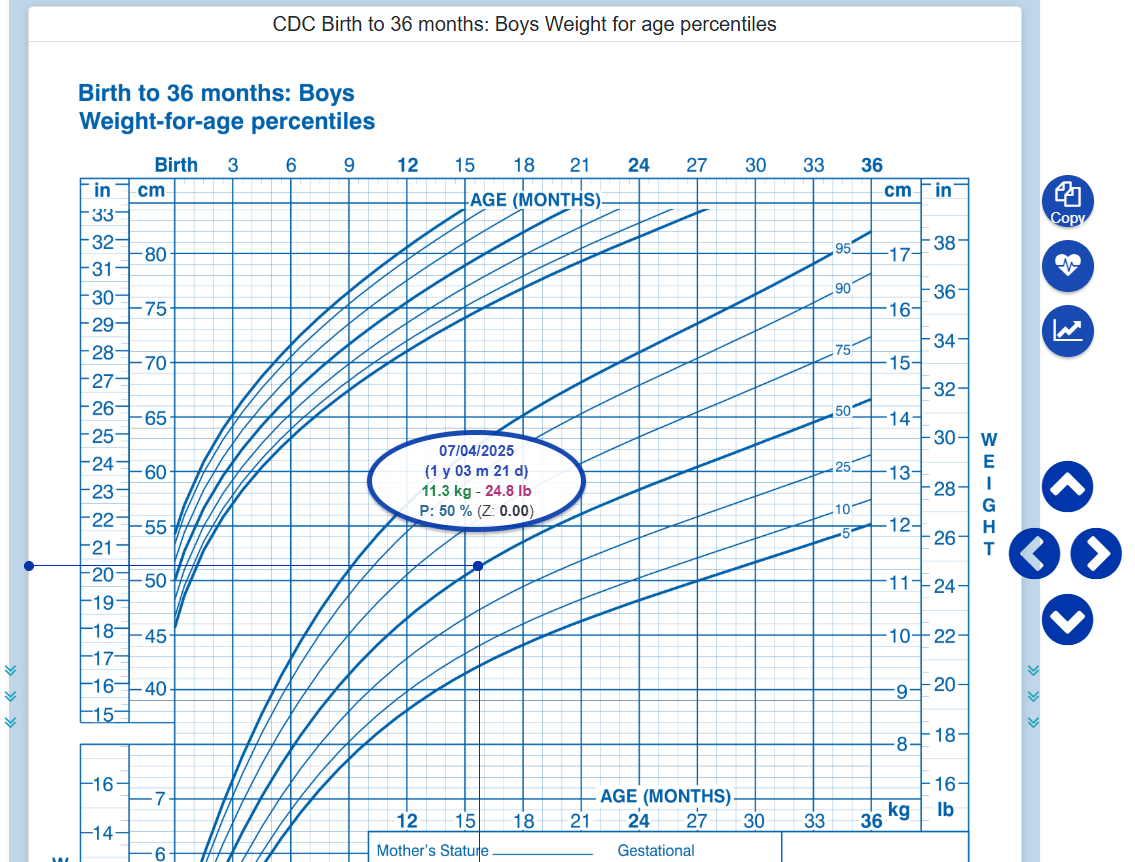
Online Child Growth Percentile Calculator (CDC, WHO , Neyzi)
Accurate, instant, and evidence-based pediatric growth evaluation tools for healthcare professionals and parents.
What is a Child Growth Percentile Calculator?
A child growth percentile calculator measures a child's developmental physical parameters—such as weight, height (length), head circumference, and blood pressure—against standardized clinical growth charts. Growth percentiles help pediatricians, family physicians, and parents track a child's developmental progress over time relative to a healthy reference population of the same age and sex.
Supported Clinical Growth Standards: CDC, WHO, and Neyzi
To ensure clinical precision across different regions and populations, our growth assessment tool integrates the three most widely recognized reference datasets:
WHO Growth Standards
Developed by the World Health Organization, these charts reflect optimal child growth under ideal health and environmental conditions. Recommended primarily for infants and children aged 0 to 5 years.
CDC Growth Reference
Published by the Centers for Disease Control and Prevention (USA), these reference curves are designed for monitoring physical growth in children and adolescents aged 2 to 20 years.
Neyzi Standards
The national pediatric growth standard developed by Prof. Dr. Olcay Neyzi et al., specifically optimized for evaluating the growth and development of children and adolescents in Turkey (0 to 18 years).
How to Interpret Growth Percentile Results?
A growth percentile indicates how a child's measurement compares with that of other children of the same age and sex in a reference population.
For example, if a child's weight is at the 15th percentile, it means that approximately 15 out of 100 children in the reference population weigh the same or less, while approximately 85 weigh more.
- 50th Percentile: Represents the median average value for a given age and gender.
- Between 10th and 90th Percentile: Considered within the standard physiological range for healthy growth.
- Below 10th and 90th Percentile: May warrant clinical review by a qualified healthcare professional to rule out growth faltering, nutritional imbalance, or hormonal factors.
A percentile alone does not determine whether a child is healthy or unhealthy. A child does not need to be at the 50th percentile to be healthy. Growth should be interpreted in the context of the child's overall health, family characteristics, and growth pattern over time. A significant change in percentile may warrant further clinical assessment.
Pediatric Blood Pressure Percentile Evaluation
In addition to height and weight tracking, calculating systolic and diastolic blood pressure percentiles adjusted for exact age, sex, and height percentile is vital for early detection of pediatric hypertension. Use our interactive tool above to run complete anthropometric and hemodynamic growth assessments instantly.
Pediatric Blood Pressure Percentile Evaluation and Hypertension Staging
In addition to height and weight tracking, evaluating systolic and diastolic blood pressure (BP) according to age, sex, and height percentile is important for identifying elevated blood pressure and pediatric hypertension. In children younger than 13 years, BP is classified using age-, sex-, and height-specific percentiles. For adolescents aged 13 years and older, fixed BP thresholds are used.
Blood Pressure Categories in Children and Adolescents
- Normal BP: Below the 90th percentile in children aged 1 to under 13 years; below 120/80 mmHg in adolescents aged 13 years and older.
- Elevated BP: At or above the 90th but below the 95th percentile in children aged 1 to under 13 years, subject to the guideline's lower-threshold rules; 120–129 mmHg systolic with diastolic BP below 80 mmHg in adolescents aged 13 years and older.
- Stage 1 Hypertension: At or above the 95th percentile but below the 95th percentile plus 12 mmHg in children aged 1 to under 13 years, applying the guideline's lower-threshold rules; 130–139 mmHg systolic or 80–89 mmHg diastolic in adolescents aged 13 years and older.
- Stage 2 Hypertension: At or above the 95th percentile plus 12 mmHg in children aged 1 to under 13 years, applying the guideline's lower-threshold rules; at least 140 mmHg systolic or 90 mmHg diastolic in adolescents aged 13 years and older.
Classification is based on whichever of systolic or diastolic BP falls into the higher category. An elevated reading does not by itself establish a diagnosis of hypertension; appropriate repeat measurements and clinical assessment are required.
Use the interactive calculator above to evaluate pediatric blood pressure percentiles and identify the corresponding BP category. Results should be interpreted in accordance with current clinical guidelines.
What Are Developmental Milestones?
Developmental milestones are skills that most children acquire at certain ages as they grow and develop. They include gross motor skills, fine motor skills, language and communication, and social-emotional skills. Examples include smiling, sitting without support, taking first steps, saying first words, and interacting with others.
Developmental milestones provide general guidance about when children commonly acquire specific skills. They are not strict deadlines, and individual children may reach milestones at different times. Results should be interpreted in the context of the child's overall development and clinical history.
If a child does not achieve an expected milestone, loses a previously acquired skill, or shows concerns in multiple developmental areas, further developmental screening or clinical assessment may be appropriate. Early identification can help children access timely support and intervention.
Developmental milestone checklists support developmental surveillance but do not replace standardized screening or a comprehensive clinical evaluation.